


Solitaire Zen - Cards Master
4.847.00 Reviews
App Specs
- Version
- 3.13.4
- Updated On
- License
- Free
- Downloads
- 10,000+
- Developer
- FelicityGames
- Categories
- Card
- Platform
- Android
Screenshots
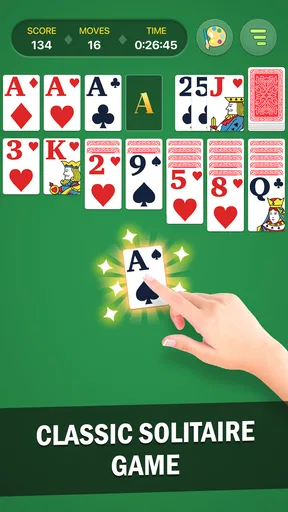
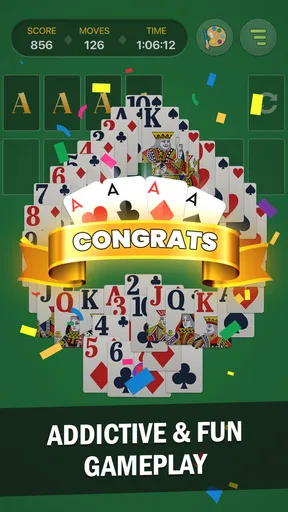
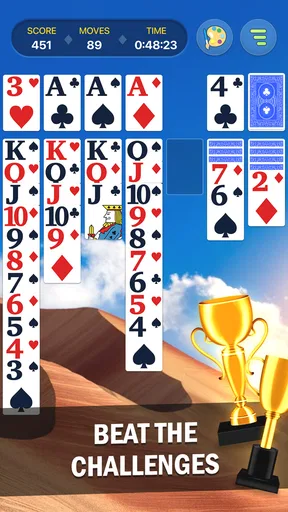
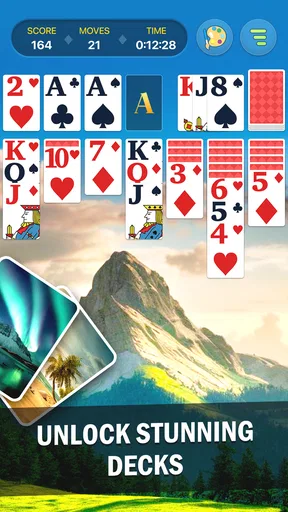
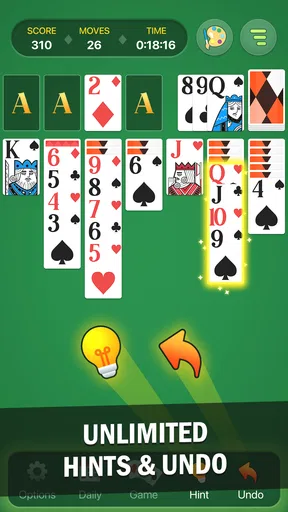
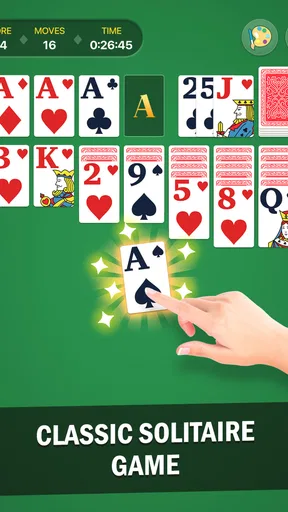
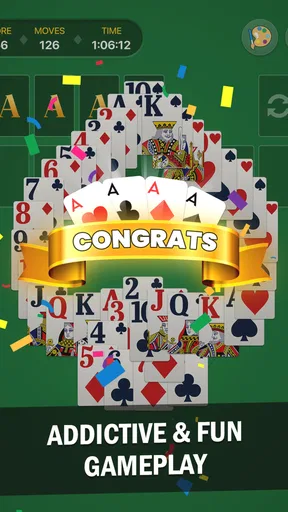
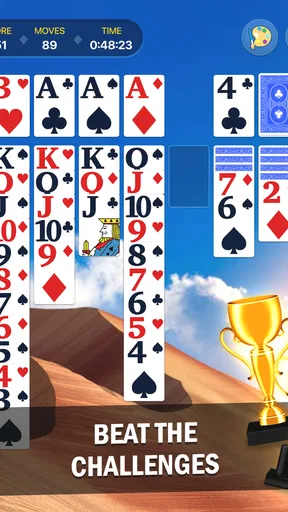
 Analysis by AppCompare
I usually know within a few sessions whether a solitaire game is something I will keep on my phone or quietly forget. Solitaire Zen - Cards Master made a good first impression because it stays focused on the simple pleasure of arranging cards while giving the experience a calmer tone than many competitive card games. It is a free card game from FelicityGames, rated for Everyone, and its central idea is easy to understand: open the game, settle into a round, and give your attention something light to do.
That simplicity is both its strongest quality and its biggest test. A solitaire game does not have to impress me with a huge feature list; it has to make starting a round feel effortless and finishing one feel satisfying. After spending time with this title, I see it as a pleasant option for short breaks, quiet evenings, and players who want a familiar puzzle without the pressure of multiplayer competition. The more important question, though, is whether that first-week comfort survives once the novelty wears off.
From an easy first session to a repeatable habit
The opening appeal is immediate. Solitaire already has a low learning barrier, so I could concentrate on the card decisions instead of learning complicated menus or rules. That makes this game approachable for someone who has not played digital solitaire recently, while experienced players can get into a round without much preparation. The “Zen” identity also sets an expectation of a slower, less frantic experience, which suits the genre well.
I found the game most useful in the small gaps of the day. A short round works when I am waiting for an appointment, taking a break from reading, or winding down before bed. Unlike a strategy game that demands a long uninterrupted session, solitaire lets me stop after a single deal without feeling that I have abandoned a larger campaign. That makes it easier to fit into a routine rather than reserve it for special gaming time.
The first-week appeal also comes from the mental rhythm. I scan the available cards, decide which move opens the most useful space, and occasionally have to resist making the first legal move I see. That tiny pause is where the game becomes more than automatic tapping. It gives the mind a modest problem to solve, but the problem remains contained and familiar.
For a new player, I recommend treating the first few sessions as practice in reading the board rather than chasing perfect results. Look for moves that reveal hidden cards or create room for longer sequences, and avoid emptying a column simply because the option is available. In solitaire, a move can be legal and still be strategically unhelpful. Learning that distinction gives the game more staying power than the basic rules alone would suggest.
One practical strength is that the game can occupy different moods. I can play attentively, thinking several moves ahead, or use it as a gentle background activity when I want something less demanding. That flexibility is valuable, although it also means the experience depends heavily on what the player wants. Someone seeking dramatic progression, social competition, or a strong narrative hook will probably find the calm format too restrained.
Worth Reading Before You Choose

Flipboard Shows What News Apps Must Do Beyond the Feed

Switching to Android Auto Means Rethinking Your Driving Routine

Google Calendar Makes a Crowded Week Easier to Manage

Ludo King Makes the Most of the Minutes Between Plans

Baby Panda World Brings Quick Play to Modern Phones, but Its Game Library Feels Busy

ESPN’s Live Game View Makes Following Close Games Easier
The store presence reflects a modest but encouraging audience: the game has an average rating of 4.8 from over 600 ratings, with more than 40 written reviews and over 10 thousand installs. Those figures do not guarantee that every player will enjoy the same style, but they fit my impression that this is designed as an accessible, easygoing card experience rather than a niche challenge title.
What makes the first week work
My best early-session habit was to separate “relaxing” rounds from “thinking” rounds. When I wanted to unwind, I played quickly and accepted that not every deal would end perfectly. When I wanted a sharper mental exercise, I slowed down before each move and considered whether I was preserving future options. Using the same game in these two ways kept it from feeling like a repetitive button-pressing exercise.
I also found it helpful not to judge the game by one unlucky deal. Solitaire naturally includes rounds where the available layout feels restrictive, and frustration grows if every loss is treated as a personal mistake. The better approach is to notice patterns: am I blocking a useful suit, spending a flexible card too early, or overlooking a move that creates space? That kind of self-review turns repetition into gradual improvement without requiring a formal tutorial.
Another non-obvious benefit is how little preparation the game needs. I do not need to remember a story, rebuild a team, or maintain a complicated inventory before returning. That makes it particularly suitable for people who want a dependable five-minute activity. The trade-off is clear: the same lack of setup that makes returning easy can make the game feel emotionally weightless after many sessions.
Does the calm appeal last from month to month?
Long-term value in a solitaire title comes from the quality of its basic loop, not from novelty alone. If arranging cards remains pleasant, the game can become a reliable digital equivalent of a paper deck. If the loop feels too predictable, the absence of broader goals becomes noticeable. In my experience, this game sits in the middle: it has enough quiet replay value for regular short sessions, but it is not the sort of app I would expect to dominate my gaming time for months.
The strongest recurring use case is habit-based play. A player might open it during a daily commute, after finishing work, or while waiting for a download or meal. The game works best when the goal is not to unlock a major milestone but to create a small pause between tasks. That is a meaningful form of value, especially for people who prefer low-pressure entertainment and do not want every mobile game to demand constant attention.
Still, habit depends on variety and personal tolerance for repetition. Players who enjoy mastering one familiar ruleset can return for a long time, refining their choices and aiming for cleaner rounds. Players who need new mechanics, opponents, events, or story developments may feel the loop flattening much sooner. I would not recommend it as a sole mobile game for someone who needs frequent surprises.
This is where it differs from common alternatives. A physical deck offers tactile satisfaction and works without a screen, but it requires a surface, setup, and enough space to lay out the cards. A more feature-heavy solitaire app may provide broader progression or several modes, but it can also introduce more menus, distractions, and pressure to keep up. A competitive card game offers stronger tension and social stakes, yet it asks for more attention and can become stressful. Solitaire Zen - Cards Master is most appealing when the player chooses calm consistency over constant escalation.
The free entry point lowers the risk of trying it. At the same time, in-app purchases range from $0.49 to $99.99 per item, so I would advise deciding in advance whether you want to spend anything. For a basic solitaire habit, the sensible approach is to begin with the free experience and only consider a purchase if it clearly improves the way you personally use the game. The existence of a high-priced item does not automatically make the game poor, but it is a reason to avoid impulse buying during a relaxing session.
The current version is 3.13.4, and the game was released on September 12, 2025. It requires Android 10 or later, which is reasonable for many modern phones but important to check if you are using an older device. These details matter for long-term planning: a player who wants to keep one lightweight game installed should confirm compatibility before building it into a daily routine.
Who will keep coming back?
I think the best long-term audience is made up of three groups. First are traditional solitaire fans who want a convenient phone version. Second are casual players who want a quiet activity that can be stopped at any moment. Third are people who enjoy small decision-making exercises but do not want the intensity of a competitive puzzle or card battler.
It is less suitable for players who expect a strong social layer, a campaign, or a constantly expanding collection of mechanics. It is also not the right choice if you dislike repeating a familiar ruleset, even when the individual layouts create different decisions. Choosing this game means accepting that the core pleasure is deliberately narrow.
A realistic routine would be to use it as a transition tool rather than an all-night game. I might play one round after putting my phone away from work, then close it instead of scrolling through more demanding content. Another player could use a round as a break between study sessions, with a clear limit of one or two games. That boundary is useful because solitaire can be relaxing without necessarily being restorative if it turns into endless automatic play.
Maintenance, friction, and the points where calm can become tiring
The maintenance burden is relatively low in the sense that the game does not require a complicated personal system. I can return after a gap without relearning a story or remembering a long chain of objectives. That is a genuine advantage over games built around daily tasks. However, low maintenance does not mean zero friction. The player still has to manage attention, resist unnecessary spending, and decide whether another round is actually enjoyable or merely habitual.
For me, the biggest maintenance task is keeping the experience intentional. Solitaire is easy to open whenever I have a spare moment, but that convenience can blur into automatic checking. I get more value when I choose a purpose before starting: a quick distraction, a focused puzzle, or a calm end to the day. If I cannot name the purpose, I am more likely to play mechanically and then feel that the session added little.
There is also a practical device consideration. Because the game requires Android 10 or newer, users with older phones should check their operating system before expecting a smooth installation. On a compatible device, the game’s appeal comes from being available quickly, but compatibility remains part of the decision for anyone trying to preserve an older phone for simple tasks.
Purchases are another source of potential friction. The free price makes experimentation straightforward, but the broad in-app purchase range means I would approach the store carefully. I would not buy simply because a round went badly or because I wanted to speed up a moment of boredom. A good rule is to wait, decide what problem the purchase solves, and ask whether the core card loop is already enough without it.
The game’s Everyone rating makes it approachable for a broad audience, including families looking for a simple card activity. Even so, age suitability does not answer whether the design matches every player’s preferences. A child may want more visual excitement, while an adult may appreciate the quieter pace. The rating tells me the content is broadly accessible; it does not turn the game into a universal recommendation.
Where repetition starts to show
The first fatigue point is predictable structure. Once the basic card logic becomes familiar, the pleasure depends on how much thought each layout demands. If I am tapping through obvious moves, the game becomes background noise. To delay that feeling, I sometimes set a personal rule: before moving a card, I ask whether it opens a hidden option, preserves flexibility, or merely looks convenient. That small discipline makes ordinary rounds more engaging.
The second fatigue point is the lack of a strong reason to return beyond the next deal. This is not necessarily a flaw; it is part of the game’s identity. But it means the title must compete with every other quiet activity on my phone. A podcast, a book, or a more varied puzzle app may offer greater depth when I have a longer block of free time. This game wins when I want a contained activity, not when I want a complete evening of entertainment.
The third is the tension between relaxation and optimization. Some players will enjoy trying to make the best possible decisions, while others will find that careful play turns a soothing activity into a mental chore. I recommend switching styles rather than forcing one. Play loosely when the goal is to unwind, and play analytically only when you genuinely want a challenge. That choice is one of the most useful ways to preserve the game’s long-term appeal.
Compared with a physical deck, the phone version is more convenient but less tactile. Compared with a feature-rich digital solitaire collection, it is easier to understand but may feel narrower. Compared with a competitive card title, it is gentler but less dramatic. These are not defects to hide; they are the trade-offs that define whether this particular game belongs on your device.
My long-term verdict
After the first-week novelty fades, I still see a reason to keep Solitaire Zen - Cards Master installed, but only for the right kind of player. Its lasting value is not in a grand progression system or a constant stream of surprises. It is in the dependable ritual of opening a familiar card puzzle, making a handful of decisions, and leaving whenever the round is over.
I would recommend it to a friend who wants a free, approachable solitaire game for short breaks and quiet routines. I would especially recommend using it with a personal boundary, such as one round during a break or a short evening session. That keeps the calm quality intact and prevents the game from becoming another source of mindless screen time.
I would steer a friend toward another option if they want multiplayer competition, a story, substantial strategic variety, or a more tactile experience. I would also suggest caution around in-app purchases: enjoy the free starting point first, and treat spending as optional rather than necessary. The game is strongest when its simplicity is accepted, not when it is judged against titles built for entirely different kinds of engagement.
FelicityGames has made a card game that understands the appeal of a small, repeatable routine. Its 4.8 average and growing player base suggest that this straightforward approach resonates with many people, while the current version gives prospective users a clear point of reference when checking compatibility. For me, it earns lasting space as a quiet utility for the mind rather than as a main gaming destination.
My final recommendation is simple: install it if you want solitaire that fits around your day, not a game that takes over your day. Give it a week, notice whether you enjoy the decisions rather than merely the taps, and then decide whether its calm rhythm deserves a permanent place on your phone. That is the real strength of Solitaire Zen - Cards Master: it does not need to be spectacular to be useful, but its value depends on whether a modest, repeatable card habit is exactly what you are looking for.
Pros
- Relaxing gameplay suited to short or extended sessions
- Clean card layouts make moves easy to follow
- Multiple solitaire variations add variety
- Offline play is convenient when traveling
- Gentle pace makes it accessible for casual players
Cons
- Some features may be locked behind ads or purchases
- Repetitive rounds can feel familiar after extended play
- Limited interaction for players seeking competitive action
- Ads may interrupt the flow between games
- Battery use can increase during longer play sessions
FAQs for Solitaire Zen - Cards Master
What is Solitaire Zen - Cards Master?
Solitaire Zen - Cards Master is a relaxing mobile card game based on classic solitaire gameplay. It is designed for players who enjoy short, casual sessions with a calm presentation, simple controls, and a focus on clearing card layouts. The game is generally easy to understand, making it suitable for beginners, while familiar solitaire mechanics provide enough challenge for experienced card-game fans.
How do you play Solitaire Zen - Cards Master?
The main objective is to arrange and remove cards according to standard solitaire rules, usually by building sequences and moving cards between the tableau, foundation, and stock areas. You tap or drag cards to make moves, depending on your device and settings. Before downloading, remember that some layouts may require strategic planning rather than random tapping, especially when several possible moves are available.
Is Solitaire Zen - Cards Master free to download and play?
Solitaire Zen - Cards Master can typically be downloaded without an upfront purchase, although the exact availability and pricing may depend on whether you use Android or iOS. Free versions of casual solitaire games commonly include advertising, optional purchases, or extra features that may require payment. It is worth checking the store listing for current information about ads, in-app purchases, and premium content.
Can Solitaire Zen - Cards Master be played offline?
Many solitaire games support offline play because the basic card mechanics do not require a continuous internet connection. However, features such as advertisements, cloud synchronization, daily challenges, leaderboards, updates, or account services may need internet access. If offline gaming is important to you, test the application after installation with Wi-Fi and mobile data disabled, since available functions can vary by version.
Is Solitaire Zen - Cards Master suitable for all ages?
The game is generally suitable for people who enjoy casual card games, including beginners and older players looking for a relaxing way to pass the time. Its controls are usually straightforward, but younger users may still encounter advertisements or optional purchases depending on the version. Parents should review the app-store age rating, privacy information, and purchase settings before allowing children to use it.


